< Tinklaraštis
VeriFactu: Spain's new tax control system
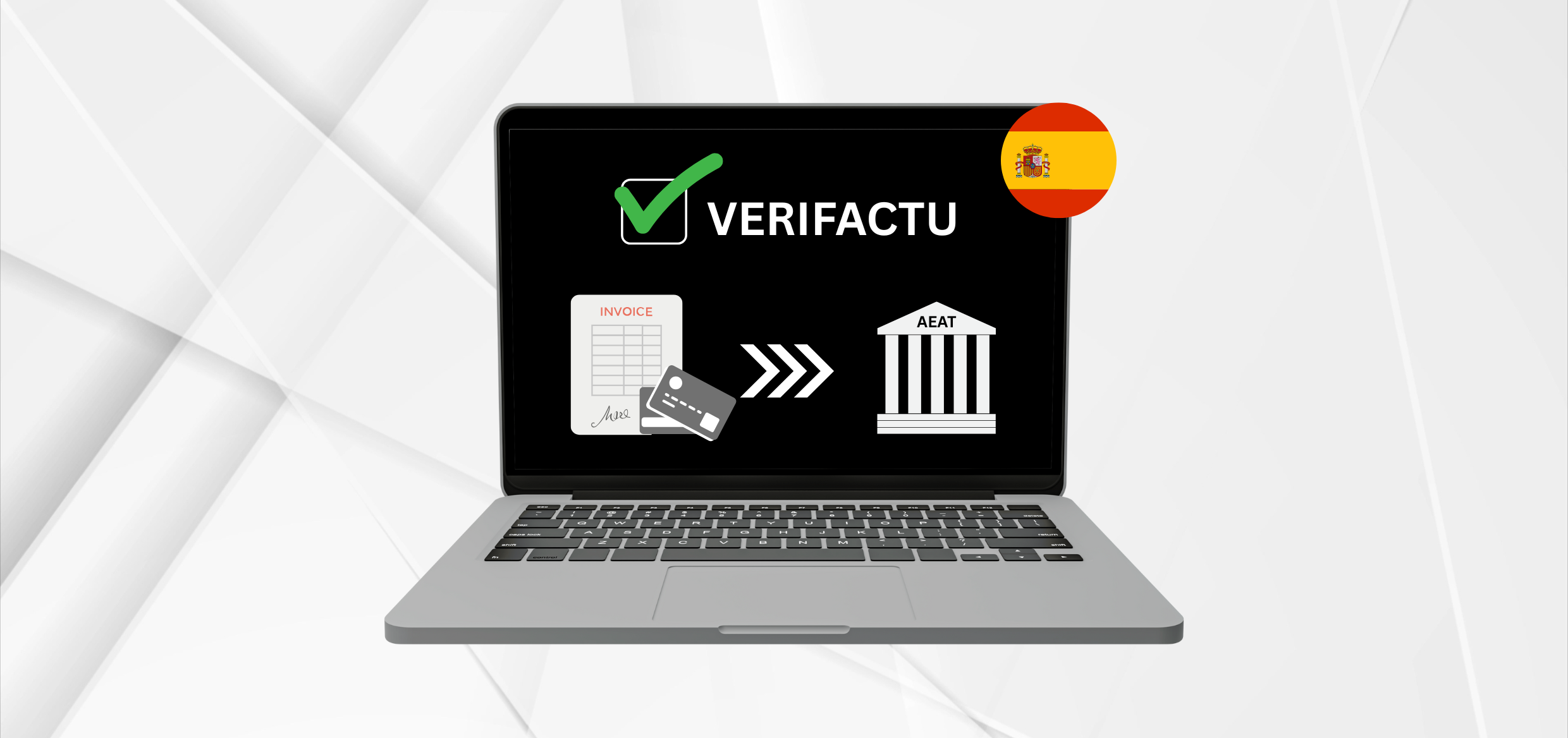
Businesses in Spain must prepare for new compliance requirements arising from the regulation governing computerised invoicing systems (SIF), of which VeriFactu is one of the available compliance methods. Initially scheduled for 2026, the obligation to adapt invoicing systems was postponed to 2027. On 5 October 2026, the Spanish Ministry of Finance announced its intention to postpone certain obligations until October 2028. However, this revised timetable remains subject to formal adoption of the relevant provisions.
Derived from Spain’s 2021 Anti-Fraud Law and developed, in particular, by Royal Decree 1007/2023, as amended in 2025, and Ministerial Order HAC/1177/2024, the framework aims to strengthen the integrity, traceability and preservation of invoicing data in order to combat tax fraud.
As a Sage business partner, Deveho Consulting Group supports businesses as they transition towards more secure invoicing management, including through solutions such as Sage X3. Actual compliance depends, however, on the software version, its configuration and the requirements applicable to each business.
VeriFactu is one of the two compliance methods provided for under Spanish regulations governing computerised invoicing systems. These regulations require affected systems to ensure, among other things, the integrity, preservation, accessibility, readability, traceability and immutability of invoicing records.
In practice, each invoice issued generates a computerised record that must meet specific technical requirements. Depending on the method selected, this record can either:
The regulations also require a QR code to be included on the relevant invoices, in accordance with the conditions set out in the applicable legislation.
The objective is clear: to limit the possibility of manipulating invoicing data, improve traceability and facilitate tax oversight.

The regulatory timetable has already been postponed. As at 12 October 2026, the deadlines set out in the regulations currently in force remain as follows:
Regulatory update: on 5 October 2026, the Spanish Ministry of Finance announced its intention to postpone the remaining obligations under the SIF regulation until October 2028, with the aim of aligning the timetable with that of B2B electronic invoicing for certain businesses. At the time of this update, this announcement should be distinguished from a formal legislative amendment. Businesses should therefore monitor official publications before changing their compliance timetable.
Please note that taxpayers covered by the Immediate Supply of Information system (Suministro Inmediato de Información, SII) are excluded from the scope of the SIF regulation in respect of their own invoices, subject to the conditions set out in the legislation. Specific rules may also apply in Spanish territories operating under special tax regimes.
To comply with the regulations, affected computerised invoicing systems must incorporate several technical and functional requirements:
It is important to distinguish these requirements from those governing B2B electronic invoicing. VeriFactu primarily concerns the operation and traceability of invoicing systems, whereas B2B electronic invoicing concerns the issuing and receiving of electronic invoices between businesses and professionals.
Compliance with the SIF regulation and the use of the VERI*FACTU method can offer several benefits:
The choice of method must nevertheless take into account the business’s obligations, organisation and computer system capabilities. NO VERI*FACTU remains a permitted regulatory option for affected taxpayers, but it entails specific technical requirements.
Achieving compliance with VeriFactu may require technical, organisational and functional adjustments. As a Sage business partner, Deveho Consulting Group supports businesses as they evolve their management and invoicing processes, including through solutions such as Sage X3.
Depending on the version deployed, the configuration selected and the business’s requirements, this support can help to:
Compliance must be verified for the specific software version and configuration in use. Businesses are therefore advised to confirm the VeriFactu functionality available with their Sage representative or implementation partner.
Spain is undergoing a significant transformation of its invoicing requirements, with several measures designed to modernise business transactions and strengthen tax oversight. Two areas should be distinguished in particular: B2B electronic invoicing and the regulation governing computerised invoicing systems, of which VeriFactu is one compliance method. Although related, they have different objectives and requirements.
Electronic invoicing involves issuing, transmitting and receiving invoices in electronic form, in accordance with the applicable regulatory requirements.
Its objectives include digitising exchanges between businesses, improving administrative efficiency and simplifying invoice processing.
An electronic invoice is not necessarily just a PDF sent by email. Depending on the applicable legislation, it may need to meet specific requirements concerning format, transmission, receipt and retention.
Spanish regulations on B2B electronic invoicing have their own implementation timetable. In October 2026, the Ministry of Finance announced its intention to align this timetable more closely with that of the SIF/VeriFactu obligations. The applicable deadlines must be confirmed against the officially published legislation.
To find out more about electronic invoicing in Spain and Europe, read our dedicated article:
https://deveho.com/newsroom/e-invoicing-in-europe/
VeriFactu forms part of Spain’s regulatory framework for computerised invoicing systems. Its main purpose is to ensure the reliability and traceability of the records generated by these systems.
Its key features include:
In summary: electronic invoicing primarily concerns the format and exchange of invoices between businesses, whereas VeriFactu concerns the compliance of the computerised systems that generate invoicing records and their tax traceability. The two frameworks are related, but they are not interchangeable and are not automatically subject to the same obligations.
With VeriFactu, Spain is strengthening the requirements applicable to computerised invoicing systems and continuing to modernise its tax administration.
For affected businesses and self-employed individuals, the challenge is to understand their applicable obligations, check that their tools comply and prepare for the regulatory deadlines. The October 2026 announcement concerning a possible postponement until October 2028 should also be monitored closely, as its implementation depends on the formal adoption of the revised timetable.
With support from partners such as Deveho Consulting Group and business management solutions such as Sage X3, businesses can assess their needs and prepare their invoicing processes for change.
Compliance with VeriFactu is therefore not merely a regulatory burden: it is also an opportunity to improve data reliability, modernise business processes and prepare for the future of digital taxation.
Official sources for monitoring regulatory developments: