< Blog
Electronic invoicing in Spain: Facturae, SII and the new VeriFactu framework
Spain is rapidly expanding electronic invoicing. After focusing mainly on public sector transactions and the SII system for large companies, it now moves into a new stage with the VeriFactu regulation, mandatory for all businesses by 2027. Technical changes, new legal obligations, and an overhaul of invoicing processes are rapidly reshaping Spain’s regulatory landscape.
While the reform represents a major national shift, it does not fully unify the Spanish landscape: companies already subject to the SII regime will remain within it, and the Basque Country maintains its own mandatory system (TicketBAI). The new VeriFactu framework therefore complements existing regimes rather than replacing them.
On 2 December 2025, the Spanish government officially postponed the implementation of Verifactu. The mandatory compliance date has been moved from 2026 to 2027. Implementation will begin on 1 January 2027 for companies, and on 1 July 2027 for SMEs and the self-employed. This postponement was approved by the Council of Ministers via a decree-law from the Ministry of Finance.
The schedule to remember is therefore:
The SII continues to operate independently.
Spain already has an advanced electronic invoicing ecosystem. Three areas currently structure the system:
Invoices intended for the public sector must be sent in Facturae XML format via the FACe or FACeB2B platforms.
Certain companies — large groups registered under certain tax regimes — must transmit their invoicing records to the Agencia Estatal de Administración Tributaria (AEAT) in near real time.
The new framework, known as Reglamento VeriFactu, will require all invoicing systems to guarantee several key elements from 2027. These include:
This is a structural reform comparable to the systems already in place in Portugal and Italy.
It is important to note that activating the VeriFactu transmission mode (automatic, real-time submission of invoices to the AEAT) remains optional. Companies may comply with VeriFactu by implementing integrity, logging and QR-code requirements without enabling automatic transmission. The AEAT encourages this mode, but it is not mandatory by default.

| Element | SII | VeriFactu |
|---|---|---|
| Nature | Transmission of VAT ledgers | Legal framework for all invoicing software |
| Target | Large companies | All businesses from 2027 onwards |
| Purpose | Near-immediate reporting | Ensure integrity, auditability, QR code, and logging |
| Format | VAT ledgers | Invoices + metadata |
| Mandatory sending? | Yes | Only when the mode is activated |
| Coexistence | Continues as is | Added on top of SII |
The two systems are not mutually exclusive: VeriFactu governs the invoice, while SII governs VAT reporting.
A single company may therefore be subject to both.
For companies already subject to the SII, VeriFactu does not modify their VAT-ledger reporting obligations. It simply adds requirements on the invoicing software (SIF). In practice, both frameworks coexist and address different parts of the invoicing process.
In terms of formats and signatures, Facturae is recognised as the standard in B2G transactions. The use of electronic signatures (XAdES or equivalent) is typically required in most cases.
Although the core framework is defined, several technical and enforcement details remain subject to final determination by the AEAT. These include:
The Basque Country (Álava, Gipuzkoa and Bizkaia) enforces its own mandatory system, TicketBAI, which continues to apply independently of VeriFactu. Companies operating in these territories may therefore be subject to both frameworks simultaneously, with partially overlapping but distinct technical requirements.
By the 4th quarter of 2025, Spain will already be well-established in terms of electronic invoicing. With the arrival of VeriFactu in 2027, all companies must prepare to upgrade their invoicing systems. Anticipating these changes is essential to avoid risks, additional costs, and penalties.
Lyon, France – 24 March 2025 - we are delighted to announce our partnership with Yooz, an expert in the digitalisation and automation of purchase-to-pay (P2P) processes.
Per saperne di più
All European companies will have to switch to e-invoicing by 2030. No more PDFs sent by email! Instead, there will be standardised formats, certified platforms and tax e-reporting. The reform is already underway. Read this article to discover the keys to understanding, anticipating and succeeding in this strategic change.
Per saperne di più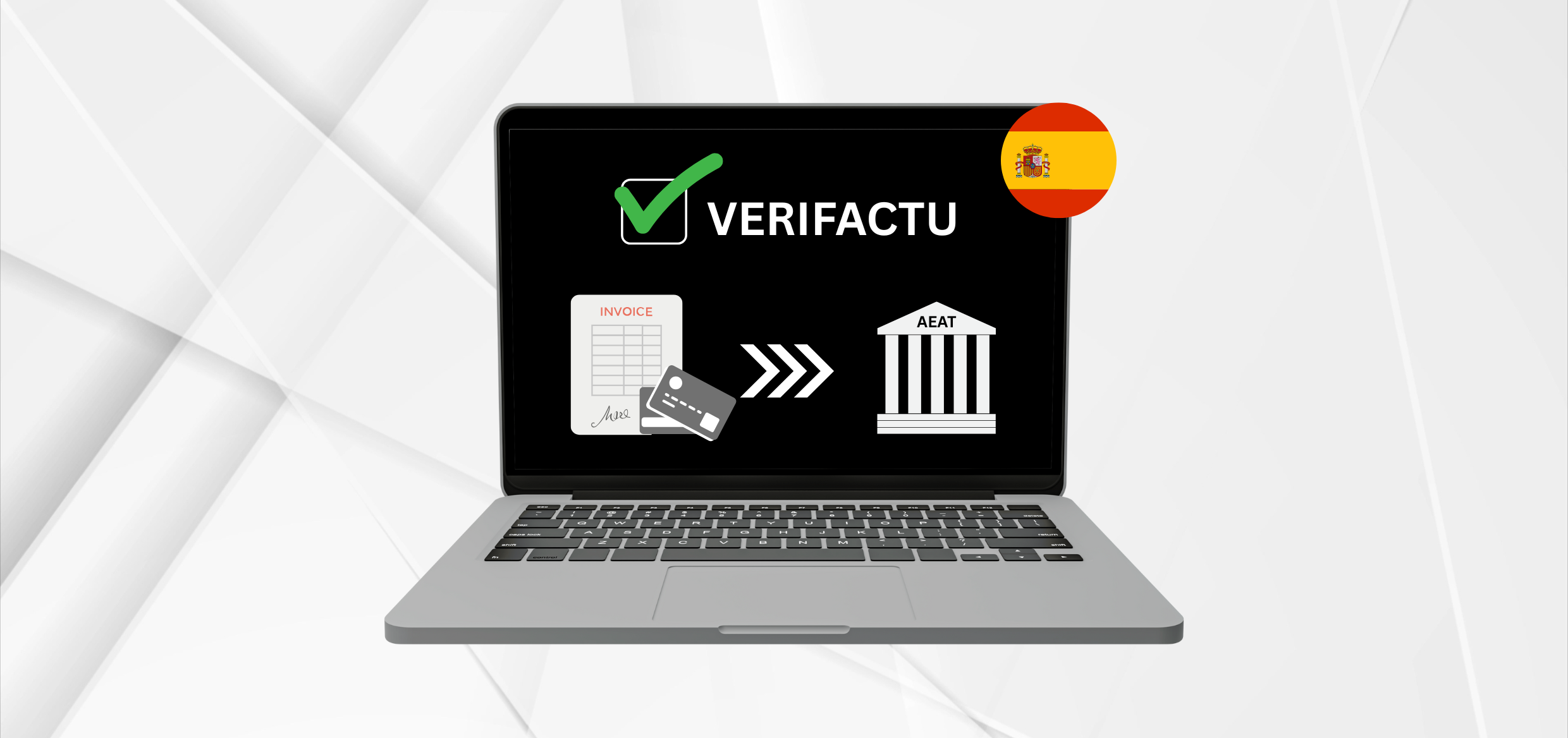
In Spain, businesses are facing a new compliance challenge with the introduction of VeriFactu. Initially scheduled for 2026, the mandatory implementation of VeriFactu has been officially postponed to 2027. As a Sage business partner, Deveho Consulting Group supports companies in this transition by offering solutions such as Sage X3 2025R1, which are designed to meet the new requirements.
Per saperne di più