
The Slovak Financial Administration launched the eFaktúra project together with experts, software companies, accounting system providers and the business community. The goal is automated invoice processing, less administration and greater efficiency. Nothing changes for consumers – the obligation applies to companies and entrepreneurs.
The reform is being introduced in stages so that businesses and software providers have time to prepare:

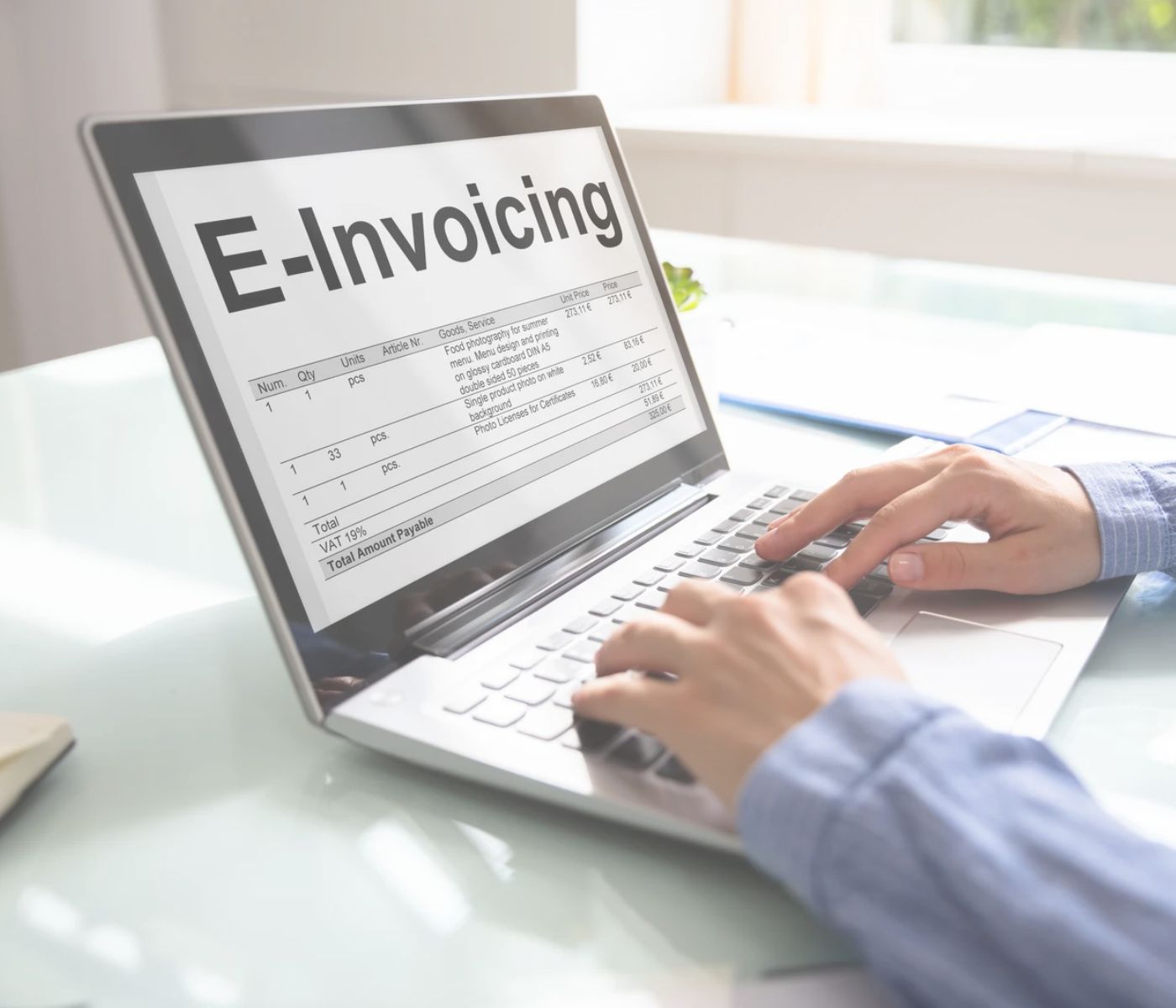
Under the new rules, an electronic invoice is not a PDF, a scan or a photo of a paper invoice. It is a structured XML file containing all mandatory details, invoice number, issue date, goods or services, amounts and customer data, in a form that software can read and process automatically. No more retyping, and no more errors that come with it.
You can still use PDF invoices outside the mandatory scope, for example when selling to consumers (B2C).

Slovakia has chosen Peppol – the European network for secure exchange of business documents – as its official infrastructure. It works like a digital postal service: you issue the invoice in your system, your certified Access Point delivers it to your customer’s Access Point, which passes it straight into the customer’s system. At the same time, selected invoice data is automatically reported to the Slovak Financial Administration.
There is no single central state server. The network is decentralised and there are multiple providers, so you can choose the one that suits you best. In Slovakia, Access Point providers are often called “digital postmen” (digitálny poštár).

A secure network for real-time delivery of electronic documents with guaranteed delivery.
A standardised invoice format based on the European standard EN 16931 and UBL 2.1, which makes invoices compatible across Europe.
Businesses send and receive invoices through their Access Point – from their accounting software or from a web or mobile app. The list of certified providers is published on the Financial Administration portal. The Financial Directorate of the Slovak Republic acts as the Peppol Authority for Slovakia. Businesses are identified in the network by the Slovak Peppol identifier 0245:DIČ (DIČ = Slovak tax identification number).
There are two obligations: issuing and receiving e-invoices.
Issuing: from 1 January 2027, VAT payers established in Slovakia must issue electronic invoices for domestic transactions with taxable persons (B2B) and with public bodies (B2G).
Receiving: every legal entity and every taxable person must be able to receive e-invoices, for example:
Even businesses that do not issue e-invoices themselves need a contract with a certified Access Point provider in order to receive them.

For domestic B2B and B2G transactions, VAT payers must:
All taxable persons must:
Invoices must follow the Peppol BIS Billing 3.0 profile, based on EN 16931 and UBL 2.1. The legally binding content is the XML data; a PDF copy may be attached but is not required.
Selected invoice data is reported to the Financial Administration automatically by your Access Point provider – you do not have to do it manually. From 1 July 2030, this near real-time reporting is expected to replace the VAT control statement and the EC Sales List.
E-invoicing was introduced by Act No. 385/2025 Coll., amending Act No. 222/2004 Coll. on Value Added Tax. The delivery service is regulated in § 76a and the transitional rules for mandatory domestic e-invoicing in § 85o.
Invoices for supplies made by 31 December 2026 do not need to be electronic, even if you issue them in January 2027.
According to the Slovak Ministry of Finance and the Financial Administration, structured invoice data is a tool for fighting tax fraud, narrowing the VAT gap and making tax collection more efficient, while also reducing the administrative burden on businesses.

E-invoicing relies on accurate master data – customers, tax IDs, products, VAT rates and payment terms. Cleaning up your data is often the first step.
If you invoice from Word, Excel or a system that cannot connect to Peppol, you will need a solution that can create and receive Peppol BIS invoices.
The obligation applies to supplies made from 1 January 2027. Set up clear rules in your system in advance for invoices relating to 2026.
Every business chooses its own Access Point provider. Key criteria are the connection to your ERP, price and support. The current list of certified providers is published by the Financial Administration.

At Deveho Consulting Group, we help companies move to e-invoicing from analysis to go-live:
Slovakia is joining the countries that are introducing mandatory e-invoicing. The system builds on the Peppol network, which is already used in almost 20 EU countries. The reform is also linked to the EU’s ViDA (VAT in the Digital Age) initiative, which aims to harmonise e-invoicing and VAT reporting across the EU – which is why the Slovak timeline extends the obligation to cross-border transactions from 1 July 2030.
Do you have partners abroad? See how e-invoicing works in France and Spain.
Not for transactions covered by mandatory e-invoicing (domestic B2B and B2G). These invoices must be structured XML files (Peppol BIS) delivered through the Peppol network. PDFs can still be used outside this scope, e.g. for B2C sales.
You do not have to issue e-invoices. But if you are a taxable person (e.g. a sole trader or landlord), you must be able to receive them – which means you need an Access Point provider.
It is the Slovak name for a certified Access Point provider – the service through which you send and receive e-invoices in the Peppol network. The list of certified providers is published on the Financial Administration portal.
It is your Slovak identifier in the Peppol network: the prefix 0245 followed by your tax identification number (DIČ). It tells the network where to deliver invoices addressed to you.
No. The obligation applies to supplies made from 1 January 2027 onwards.
Not necessarily. What matters is whether your system can create and receive Peppol BIS invoices and is connected to an Access Point. If you use Sage X3, we can help you with this.
Right now. The voluntary period runs throughout 2026, so you can already send and receive e-invoices through an Access Point. We recommend starting as early as possible.
From 1 July 2030, they are expected to be replaced by automatic, near real-time reporting of invoice data to the Financial Administration.
The first phase from 2027 covers domestic transactions only. Extension to cross-border transactions is planned from 1 July 2030.
On the Slovak Financial Administration website, in the eFaktúra section (an English version is available): financnasprava.sk.
Get in touch and together we will set up a smooth, secure and compliant e-invoicing solution for your business.
Les entreprises modernes ont besoin de rapidité et d’agilité, à commencer par les systèmes financiers et comptables qui sont la pierre angulaire de toutes les opérations.
L’environnement économique récent s’est considérablement complexifié, mettant en évidence un besoin croissant de réactivité à l’ère du numérique, mais les systèmes de gestion peinent encore à s’adapter aux évolutions des besoins des entreprises.

L’adoption de la facturation électronique (ou E-invoicing) va accélérer le recouvrement et réduire les coûts de gestion des factures de toutes les entreprises. C’est quoi, une facture électronique / facture numérique ? Et à quoi sert de tout changer pour aller vers la dématérialisation des factures ?
La facture électronique va unifier l’ensemble des systèmes de gestion des entreprises autour de règles communes et de protocoles identiques. La digitalisation franchit ainsi une nouvelle étape, avec son lot de gisements de productivité et d’accélération de la rotation du cash. Et à travers cette intégration inédite, c’est aussi la valeur de la donnée qui se trouve décuplée .
 E-invoicing