The platform automates the entire invoice lifecycle:
from creation to receipt, right through to reconciliation with purchase orders, enabling smoother management and reducing the risk of manual errors.
Every action taken is fully tracked, providing a detailed audit trail that ensures transparency, reliability, and compliance.
Hosted in the cloud, Sage Network is accessible at any time, from any connected device, facilitating effective collaboration between your internal teams and external partners.
Sage Network facilitates your exchanges even with customers who are not yet integrated into electronic invoicing.
Interactions with your suppliers become more efficient thanks to centralized and intuitive management.
Anyone can access electronic invoices without going through the management software:
1.Understanding the challenges of the Approved Platform (PA) – formerly PDP
The Approved Platform (PA) plays a central role in the new system: it guarantees the secure transmission of your electronic invoices to your customers, suppliers and the authorities.
All companies will need to have one in order to continue issuing and receiving invoices in accordance with the law.
🎥 Watch our explanatory video to understand everything:
What is a PDP and how does electronic invoicing work? | CQFE answers your questions
2. Choosing the right platform
Your Approved Platform (PA) – formerly PDP – must be able to integrate seamlessly into your management environment, including for international flows.
By choosing Sage Network, you benefit from the power of a certified AP, enhanced with high value-added services:
🎥 Discover the advantages of Sage Network in this video:
Electronic invoicing: how to choose your PDP? CQFE has the answer
3. Complete your registration
Register your Sage PDP (Approved Platform (PA) – formerly PDP) today
& the registration process explained
E-invoicing in France is part of a move towards paperless transactions. From September 2026, all businesses in France, regardless of size, must be able to receive invoices in electronic format.
This project is being led by the French government with the aim of simplifying the invoicing and payment chain and optimising VAT collection. It will have a major impact. So it’s important to understand how e-invoicing will affect businesses.
We can talk about a massive increase in paperless exchanges.
The timetable for the implementation of the reform means that companies and their partners (invoicing software publishers, data flow platforms, etc.) can organise themselves rapidly.

Find out about the local requirements for e-invoicing in France.
What changes with e-invoicing?
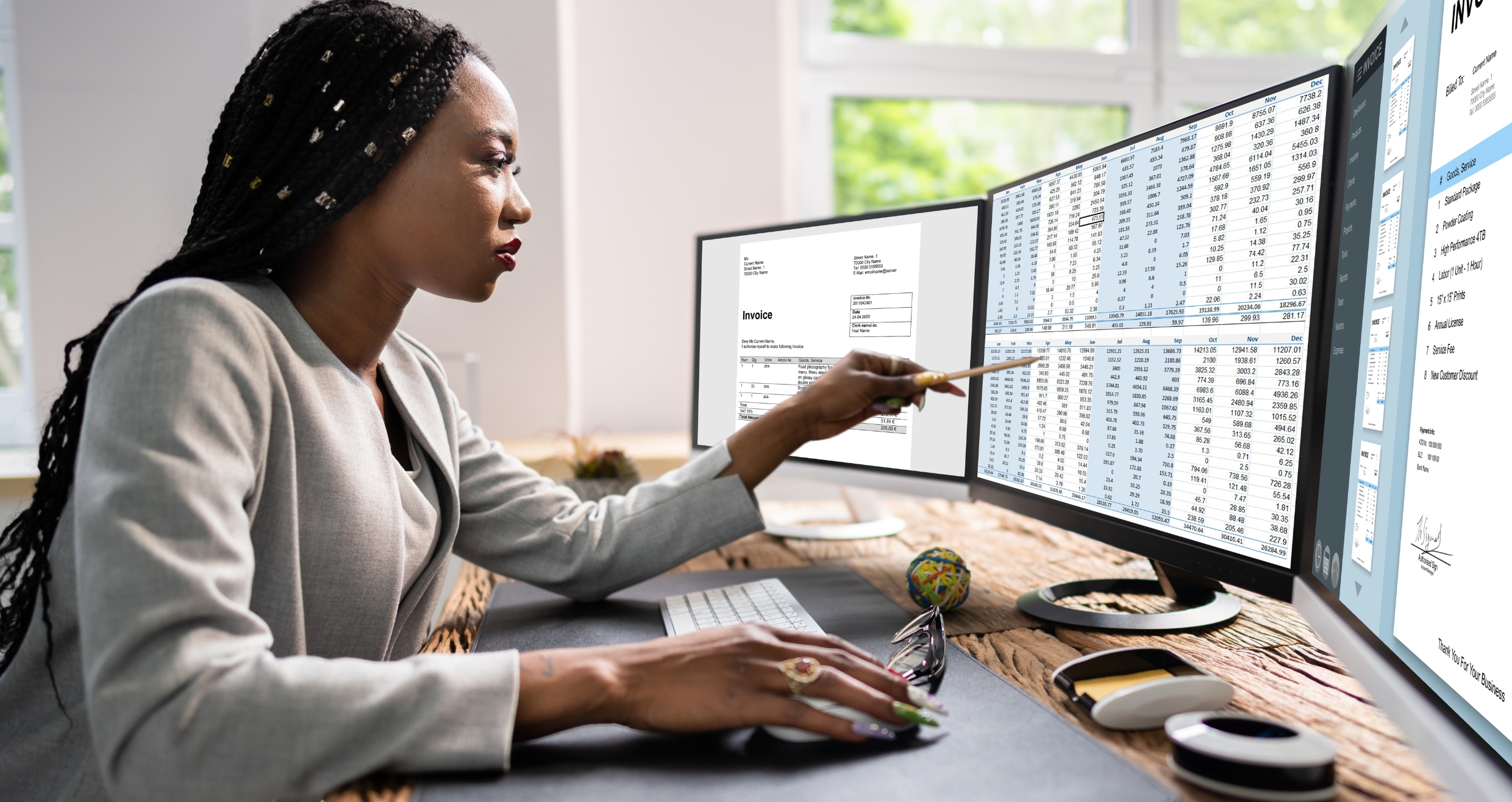
Mandatory B2B e-invoicing simplifies the processing of incoming and outgoing invoices, as well as the filing of VAT returns.
Easier integration of all incoming invoices into companies’ accounting systems.
A priori control of the conformity of outgoing invoices and rejection of non-compliant invoices at source.
Transparency for customers on the progress of invoice processing.
Discover our E-invoicing requierments around the world.
From 1 September 2026, it will no longer be possible to ask your suppliers for paper or simple PDF invoices.
All businesses will have to:
From 1 September 2026 for the largest businesses and progressively until September 2027 for others, all businesses must be able to :
Ensure compliance with 4 e-invoicing methods:
It will be mandatory to archive electronic invoices in their original computer format. Archiving consists of a sealed, time-stamped deposit in a digital safe.
The creation of an invoicing network linking all BtoB players is accompanied by total transparency on the progress of each invoice, status by status:
4 obligatory statuses are communicated by all platforms:
Other statuses (made available; taken in charge; approved; partially approved; payment forwarded), which are recommended but optional, and still others, known as free statuses, will be included or not in the services offered by the platforms.
These statuses are treated as management information rather than billing information. In short, customer credit management, cash flow management and business intelligence will be greatly improved.
E-reporting is the transmission of data to the tax authorities. These new data flows must be submitted:
How does it work?
The frequency of the e-reporting flows depends on the VAT regime of the company. The issuing platform chosen by the company (PPF or PA) concentrates and transmits these flows to the tax authorities.
An electronic invoice must fulfil two conditions:
Two formats will be in circulation:
Platforms will emerge to enable businesses to benefit from e-invoicing in a simple and secure way.
For businesses, the adoption of electronic invoicing will primarily mean lower costs:
Simplified reminders, fewer disputes, automated invoice reconciliation, traceability of invoice processing and instant access to archived documents all help to reduce the cost and processing time of dematerialised invoices.
The Forum National de la Facture Électronique estimates that the productivity gain is 1/3 for the supplier and 2/3 for the customer.
Les entreprises modernes ont besoin de rapidité et d’agilité, à commencer par les systèmes financiers et comptables qui sont la pierre angulaire de toutes les opérations.
L’environnement économique récent s’est considérablement complexifié, mettant en évidence un besoin croissant de réactivité à l’ère du numérique, mais les systèmes de gestion peinent encore à s’adapter aux évolutions des besoins des entreprises.

L’adoption de la facturation électronique (ou E-invoicing) va accélérer le recouvrement et réduire les coûts de gestion des factures de toutes les entreprises. C’est quoi, une facture électronique / facture numérique ? Et à quoi sert de tout changer pour aller vers la dématérialisation des factures ?
La facture électronique va unifier l’ensemble des systèmes de gestion des entreprises autour de règles communes et de protocoles identiques. La digitalisation franchit ainsi une nouvelle étape, avec son lot de gisements de productivité et d’accélération de la rotation du cash. Et à travers cette intégration inédite, c’est aussi la valeur de la donnée qui se trouve décuplée .
 E-invoicing